

How does touch control work on a Led Mirror?
Jun 03, 2025
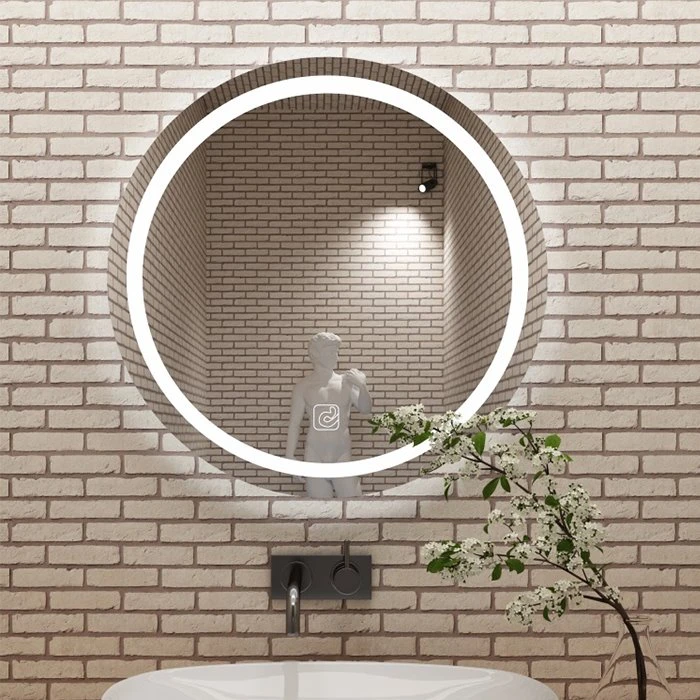
In the contemporary world of interior design, LED mirrors have emerged as a revolutionary addition to bathrooms and dressing areas. These mirrors not only offer clear reflections but also come with the added functionality of illumination. One of the most appealing features of modern LED mirrors is touch control, which provides users with a seamless and intuitive way to interact with the mirror's lighting and other functions. As a leading supplier of LED mirrors, I am excited to delve into the science behind how touch control works on these innovative fixtures.
The Basics of Touch Control Technology
Touch control technology has become ubiquitous in our daily lives, from smartphones and tablets to kitchen appliances and now LED mirrors. At its core, touch control relies on the detection of physical contact or proximity to a surface to trigger a response. There are several types of touch control technologies, but the most commonly used in LED mirrors are capacitive and resistive touch sensors.
Capacitive Touch Sensors
Capacitive touch sensors are the most prevalent type of touch control technology in modern LED mirrors. These sensors work based on the principle of capacitance, which is the ability of a system to store an electric charge. A capacitive touch sensor consists of a layer of conductive material, typically indium tin oxide (ITO), applied to the surface of the mirror. When a user touches the mirror, the electrical charge on the surface of the sensor is disrupted, creating a change in capacitance. This change is detected by the sensor's circuitry, which then sends a signal to the mirror's control system to activate the desired function.
One of the key advantages of capacitive touch sensors is their high sensitivity and accuracy. They can detect even the lightest touch, making them ideal for use in LED mirrors where a gentle touch is often preferred. Additionally, capacitive touch sensors are highly durable and resistant to wear and tear, ensuring long-lasting performance.
Resistive Touch Sensors
Resistive touch sensors are another type of touch control technology that can be used in LED mirrors. Unlike capacitive touch sensors, resistive touch sensors work by detecting changes in resistance when pressure is applied to the surface of the mirror. A resistive touch sensor consists of two layers of conductive material separated by a thin gap. When a user presses on the mirror, the two layers come into contact, creating a change in resistance. This change is detected by the sensor's circuitry, which then sends a signal to the mirror's control system.
Resistive touch sensors are generally less expensive than capacitive touch sensors and can be more suitable for applications where a more forceful touch is required. However, they are also less sensitive and accurate than capacitive touch sensors and may be more prone to wear and tear over time.
How Touch Control is Integrated into LED Mirrors
In an LED mirror, the touch control system is typically integrated into the mirror's frame or bezel. The touch sensors are connected to a control board, which is responsible for processing the signals from the sensors and sending commands to the mirror's lighting and other functions. The control board is usually powered by a low-voltage DC power supply, which is connected to the mirror's main power source.
When a user touches the mirror, the touch sensor detects the change in capacitance or resistance and sends a signal to the control board. The control board then processes the signal and determines the appropriate action to take. For example, if the user touches the mirror to turn on the lights, the control board will send a signal to the LED driver to activate the lights. If the user touches the mirror to adjust the brightness or color temperature of the lights, the control board will send a signal to the LED driver to make the necessary adjustments.
Benefits of Touch Control in LED Mirrors
Touch control offers several benefits in LED mirrors, making them a popular choice among consumers. Some of the key benefits include:
Convenience
Touch control provides a convenient and intuitive way to interact with the mirror's lighting and other functions. With just a touch of a finger, users can turn the lights on and off, adjust the brightness and color temperature, and even activate other features such as defogging or Bluetooth connectivity. This eliminates the need for traditional switches or buttons, which can be difficult to reach or operate in some situations.
Style
Touch control adds a modern and stylish touch to LED mirrors, enhancing their overall aesthetic appeal. The sleek and minimalist design of touch control panels blends seamlessly with the mirror's frame, creating a clean and sophisticated look. Additionally, touch control panels can be customized with different colors and finishes to match the style of any bathroom or dressing area.
Hygiene
Touch control is a more hygienic option compared to traditional switches or buttons. Since there are no physical buttons to press, there is less risk of spreading germs or bacteria. This is especially important in public restrooms or shared bathrooms where multiple people may use the mirror.
Applications of Touch Control in LED Mirrors
Touch control in LED mirrors can be used in a variety of applications, including:
Bathroom Vanity Mirrors
Bathroom Vanity Mirror with Lights and Storage are a popular choice for bathrooms, providing both illumination and storage space. Touch control allows users to easily turn the lights on and off, adjust the brightness and color temperature, and access the storage compartments. This makes it convenient for users to get ready in the morning or evening, without having to fumble with traditional switches or buttons.
Bedroom Mirrors
Bathroom Vanity Mirror with Led Lights can also be used in bedrooms, providing a convenient and stylish way to get dressed and groomed. Touch control allows users to adjust the lighting to suit their needs, whether they are applying makeup, styling their hair, or getting dressed for a night out.
Dressing Room Mirrors
Rectangular Illuminated Bathroom Mirror are essential in dressing rooms, providing a clear and well-lit reflection for trying on clothes. Touch control allows users to adjust the brightness and color temperature of the lights to create the perfect lighting conditions for evaluating their outfits.
Conclusion
Touch control is a revolutionary technology that has transformed the way we interact with LED mirrors. By providing a convenient, stylish, and hygienic way to control the mirror's lighting and other functions, touch control has become a popular feature in modern LED mirrors. As a supplier of LED mirrors, we are committed to providing our customers with the latest technology and innovative designs. If you are interested in learning more about our LED mirrors or would like to discuss your specific requirements, please contact us to start a procurement negotiation. We look forward to working with you to create the perfect LED mirror for your space.

References
- "Capacitive Touch Sensing: Theory and Applications." Texas Instruments.
- "Resistive Touch Screens: How They Work and Their Applications." All About Circuits.
- "The Benefits of Touch Control in LED Mirrors." Home Decor Bliss.