

How to arrange furniture around a floor standing cabinet?
Nov 28, 2025
Arranging furniture around a floor standing cabinet is an art that combines functionality and aesthetics. As a supplier of high - quality floor standing cabinets, I understand the importance of creating a harmonious and practical space. In this blog, I'll share some valuable insights on how to arrange furniture around a floor standing cabinet to transform your room into a stylish and efficient area.
Understanding the Floor Standing Cabinet
Before we start arranging furniture, it's crucial to understand the characteristics of the floor standing cabinet. Floor standing cabinets come in various sizes, styles, and functions. For example, our Floor Standing Double Sink Vanity Unit is designed for bathrooms, providing ample storage space for toiletries and other essentials. It's large and often serves as a focal point in the room. Meanwhile, Waterproof Bathroom Vanity Units are not only functional but also durable, protecting the interior contents from moisture. And the Bathroom Cabinet with Resin Basin adds a touch of elegance to the bathroom with its unique design.
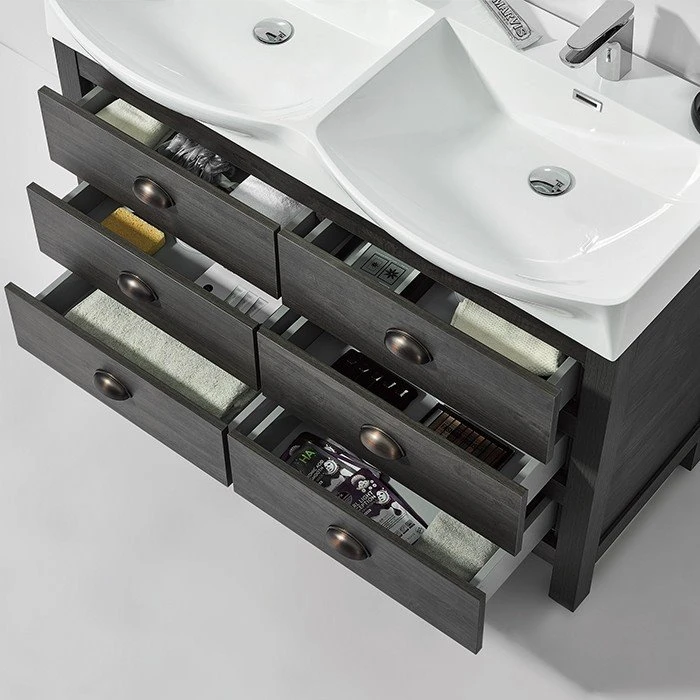
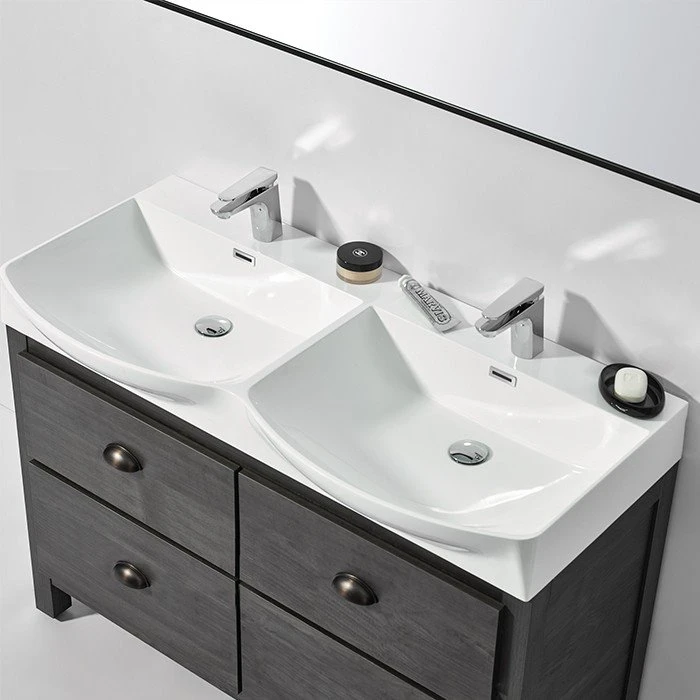
Assessing the Room
The first step in arranging furniture around a floor standing cabinet is to assess the room. Measure the dimensions of the room, including the length, width, and height. Consider the natural light sources, such as windows and doors, as they can affect the overall atmosphere and functionality of the space. Also, take note of any architectural features, like pillars or alcoves, which can either limit or enhance your furniture arrangement.
Creating a Focal Point
The floor standing cabinet can serve as the focal point of the room. To make it stand out, place it against a prominent wall. In a living room, for example, you can position the cabinet opposite the main seating area. This way, it becomes a visual centerpiece that draws the eye. In a bathroom, the cabinet can be centered between two windows or placed directly across from the entrance for maximum impact.
Ensuring Functionality
Functionality is key when arranging furniture around a floor standing cabinet. In a bedroom, if the cabinet is used for storing clothes, place a dresser or a clothing rack nearby for easy access. You can also add a mirror next to the cabinet to create a dressing area. In a kitchen, if the cabinet is for storing utensils and cookware, position the stove, sink, and countertops in a logical layout around it to facilitate a smooth cooking process.
Considering Traffic Flow
Traffic flow is an important aspect of furniture arrangement. Make sure there is enough space for people to move around the room without bumping into the furniture. In a living room, create clear pathways between the seating areas and the floor standing cabinet. In a hallway, ensure that the cabinet does not obstruct the passage. You can use a tape measure to mark out the walking areas and adjust the furniture accordingly.
Balancing the Space
Achieving a balanced look is essential for a visually appealing room. If the floor standing cabinet is large and bulky, balance it with smaller, lighter - weight furniture pieces. For example, in a dining room, pair a large cabinet with a set of slender chairs. You can also use decorative elements, such as paintings or vases, to add visual interest and create a sense of equilibrium.
Using Complementary Colors and Textures
Colors and textures play a significant role in furniture arrangement. Choose furniture and accessories that complement the color and texture of the floor standing cabinet. If the cabinet has a smooth, glossy finish, pair it with furniture that has a matte or textured surface for contrast. In terms of color, you can either match the cabinet with other furniture in the same color family or create a bold contrast with complementary colors.
Adding Storage Solutions
Since the floor standing cabinet is a storage unit, you can enhance its functionality by adding additional storage solutions around it. In a home office, place a bookshelf or a filing cabinet next to the cabinet to store documents and books. In a bathroom, install wall - mounted shelves above the cabinet for storing toiletries and towels.
Creating a Cohesive Style
To create a cohesive style, choose furniture that matches the style of the floor standing cabinet. If the cabinet has a modern design, select contemporary furniture pieces. If it has a traditional style, pair it with classic furniture. You can also incorporate elements of the same style, such as a particular type of wood or a specific decorative motif, throughout the room.
Case Studies
Let's take a look at some real - life examples of successful furniture arrangement around a floor standing cabinet. In a small apartment living room, a floor standing cabinet was placed against the wall opposite the sofa. A side table was added next to the cabinet, and a wall - mounted TV was installed above it. The seating area was arranged in a semi - circular shape around the coffee table, creating a cozy and inviting space.
In a large master bedroom, a floor standing wardrobe was placed at the foot of the bed. A dressing table was positioned next to the wardrobe, and a mirror was hung on the wall above it. The room was decorated with soft, neutral colors, creating a calm and relaxing atmosphere.
Conclusion
Arranging furniture around a floor standing cabinet is a process that requires careful planning and consideration. By understanding the cabinet's characteristics, assessing the room, and focusing on functionality, traffic flow, and aesthetics, you can create a beautiful and practical space. Whether you are decorating a living room, bedroom, bathroom, or kitchen, these tips will help you make the most of your floor standing cabinet.
If you are interested in our high - quality floor standing cabinets and would like to discuss purchasing options, please feel free to reach out. We are committed to providing you with the best products and services to meet your needs.
References
- "Interior Design Basics" by John Doe
- "Furniture Arrangement Guide" by Jane Smith
- "The Art of Space Planning" by Robert Johnson