

How to choose the right hinges for a wall - hung cabinet?
Sep 30, 2025
Selecting the appropriate hinges for a wall - hung cabinet is a crucial decision that can significantly impact the functionality, durability, and overall aesthetic of your cabinet. As a seasoned Wall Hung Cabinet supplier, I understand the importance of this choice and am here to guide you through the process.
Understanding the Basics of Hinges
Hinges are the unsung heroes of any cabinet. They are the components that allow the cabinet doors to open and close smoothly, and they bear the weight of the doors over time. There are several types of hinges available in the market, each with its own unique features and applications.
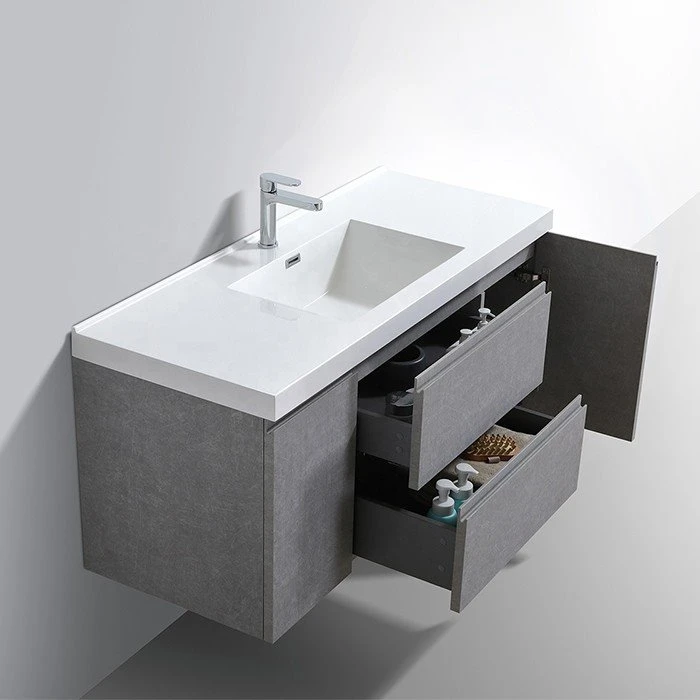

Concealed Hinges
Concealed hinges are a popular choice for wall - hung cabinets. They are installed inside the cabinet, making them invisible when the door is closed. This gives the cabinet a clean and modern look. Concealed hinges come in different styles, such as full - overlay, half - overlay, and inset. Full - overlay hinges are used when you want the door to cover the entire face of the cabinet frame. Half - overlay hinges are suitable for cabinets with adjacent doors, where each door covers half of the frame. Inset hinges are used when the door fits inside the cabinet frame, creating a flush look. You can find these hinges in various finishes, such as chrome, nickel, and black, to match the style of your Bathroom Furniture Sets with Sink.
Exposed Hinges
Exposed hinges are visible on the outside of the cabinet. They are often used for a more rustic or traditional look. Exposed hinges come in a variety of designs, from simple butt hinges to decorative strap hinges. While they may not offer the same level of smooth operation as concealed hinges, they can add a unique charm to your wall - hung cabinet.
Soft - Close Hinges
Soft - close hinges are a must - have for any modern cabinet. They use a hydraulic mechanism to slow down the closing of the door, preventing it from slamming shut. This not only reduces noise but also extends the life of the hinge and the cabinet door. Soft - close hinges are available in both concealed and exposed styles, and they are a great addition to any Sink and Cabinet Set.
Factors to Consider When Choosing Hinges
Weight and Size of the Door
The weight and size of the cabinet door are important factors to consider when choosing hinges. Heavier and larger doors require hinges with a higher weight capacity. If you choose hinges that are not strong enough, they may break or become loose over time, causing the door to sag or not close properly. As a general rule, for standard cabinet doors, you can use hinges with a weight capacity of around 5 - 10 kg. For larger or heavier doors, such as those on a 48 Inch Double Vanity, you may need hinges with a weight capacity of 15 kg or more.
Frequency of Use
If the cabinet door will be opened and closed frequently, you need to choose hinges that are durable and can withstand repeated use. Soft - close hinges are a good choice in this case, as they are designed to last for thousands of cycles. Look for hinges with a high - quality construction and a good warranty to ensure long - term performance.
Style and Finish
The style and finish of the hinges should match the overall design of your wall - hung cabinet. As mentioned earlier, concealed hinges offer a modern and clean look, while exposed hinges can add a traditional or rustic touch. Choose a finish that complements the hardware and the color of the cabinet. For example, if your cabinet has a chrome handle, you may want to choose chrome - finished hinges for a coordinated look.
Installation Requirements
Some hinges are easier to install than others. Concealed hinges may require more precise installation, as they need to be aligned correctly to ensure smooth operation. If you are not confident in your DIY skills, you may want to consider hiring a professional to install the hinges for you. Make sure to read the installation instructions carefully before you start the installation process.
Compatibility with Wall - Hung Cabinets
Wall - hung cabinets have specific requirements when it comes to hinges. Since they are mounted on the wall, the hinges need to be able to support the weight of the door without causing the cabinet to become unbalanced. Look for hinges that are designed for wall - hung cabinets and have a good load - bearing capacity.
In addition, the depth of the cabinet can also affect the choice of hinges. Deeper cabinets may require longer hinges to ensure that the door can open fully without hitting the back of the cabinet. Make sure to measure the depth of your cabinet and choose hinges that are suitable for its dimensions.
Maintenance and Care of Hinges
Proper maintenance and care of your hinges can extend their lifespan and keep your cabinet doors operating smoothly. Regularly clean the hinges with a mild detergent and a soft cloth to remove dirt and debris. Lubricate the hinges with a silicone - based lubricant every few months to ensure smooth operation. If you notice any signs of wear or damage, such as loose screws or a squeaking sound, replace the hinges as soon as possible to prevent further damage to the cabinet.
Conclusion
Choosing the right hinges for your wall - hung cabinet is a decision that should not be taken lightly. By considering factors such as the type of hinge, the weight and size of the door, the frequency of use, the style and finish, and the installation requirements, you can select hinges that will provide long - term performance and enhance the overall look of your cabinet.
As a Wall Hung Cabinet supplier, we are committed to providing our customers with high - quality products and expert advice. If you have any questions about choosing the right hinges for your cabinet or need help with your cabinet purchase, please feel free to contact us. We are here to assist you in making the best decision for your project.
References
- "Cabinet Hardware Handbook" by Bob Flexner
- "The Complete Guide to Cabinet Making" by Chris Schwarz