

What is the impact of water hardness on a cabinet bathroom basin?
Jan 02, 2026
Hey there! I'm a supplier of Cabinet Bathroom Basin, and today, I wanna chat about something that might not cross your mind often but can have a big impact on your bathroom basin: water hardness.
What is Water Hardness?
First off, let's get on the same page about what water hardness actually is. Water hardness is basically the amount of dissolved minerals, mainly calcium and magnesium, in your water. When you've got a high concentration of these minerals, you've got hard water. On the flip side, soft water has fewer of these dissolved minerals.
You can usually tell if you've got hard water just by looking at some signs around your home. Ever noticed white, chalky deposits on your faucets or showerheads? That's a classic sign of hard water. You might also find that your soap doesn't lather as well as it should, leaving a kind of soapy scum on your skin or in the bathtub.
How Hard Water Affects Your Cabinet Bathroom Basin
Surface Stains and Deposits
One of the most obvious impacts of hard water on your Cabinet Bathroom Basin is the build - up of stains and deposits. As the water evaporates from the basin, the dissolved minerals are left behind. Over time, these deposits form a white, cloudy film on the surface of the basin. This not only looks unappealing but can also make your basin seem dirty even after you've given it a good scrub.
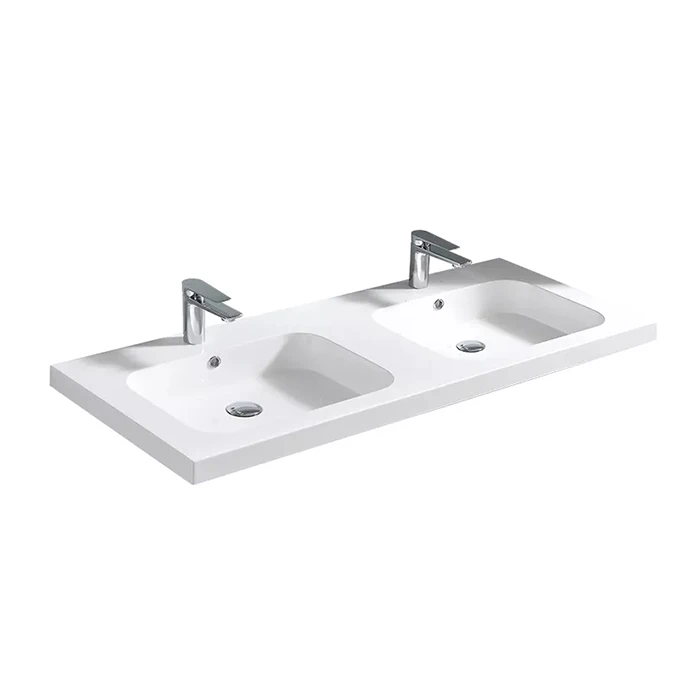
If you've got a light - colored basin, these deposits are even more noticeable. They can dull the finish of your basin, making it look older and less shiny. And if you've got a Double Sink Wash Basin, the problem can be magnified, as there's more surface area for the deposits to build up.
Corrosion and Damage
Hard water can also be pretty harsh on the basin's surface. The minerals in the water can react with the materials of the basin, especially if it's made of certain types of metals or has a coating. For example, over time, the constant exposure to hard water can cause pitting on the surface of a metal basin. This not only weakens the basin but also creates small crevices where more dirt and bacteria can accumulate.
Even non - metal basins aren't completely immune. Some types of porous materials can absorb the minerals in hard water, causing discoloration and a loss of structural integrity. If you have a Bathroom Sink Wash Basin made of a composite material, the hard water can penetrate the surface, leading to cracks or a change in texture.
Clogging of Drains
Another issue related to hard water is the clogging of drains. The minerals in hard water can form scale inside the pipes that connect your basin to the main plumbing system. As the scale builds up, it reduces the diameter of the pipes, restricting the flow of water. This can lead to slow drainage or even complete blockages.
Imagine having to deal with a clogged sink on a daily basis. It's not only annoying but can also be a hassle to fix. You might end up spending a lot of money on drain cleaners or calling a plumber to clear the blockage.
Preventive Measures and Maintenance
Using Water Softeners
One of the best ways to prevent the negative impacts of hard water on your Cabinet Bathroom Basin is to use a water softener. A water softener works by removing the calcium and magnesium ions from the water, replacing them with sodium ions. This makes the water "softer" and less likely to cause deposits and damage.

There are different types of water softeners available on the market, from small, point - of - use units that can be installed directly under the sink to whole - house systems. Investing in a water softener can save you a lot of headaches in the long run, as it'll help keep your basin and other plumbing fixtures in good condition.
Regular Cleaning and Maintenance
Even if you have hard water, regular cleaning can go a long way in preventing the build - up of deposits. Use a mild cleaner that's specifically designed for bathroom basins. Avoid using abrasive cleaners, as they can scratch the surface of the basin, making it more prone to damage.
After cleaning, dry the basin thoroughly with a soft cloth. This helps prevent water from sitting on the surface and evaporating, which is when the minerals are left behind as deposits. Also, make sure to clean the drain regularly to prevent scale from building up.
Our Cabinet Bathroom Basins and Hard Water
At our company, we understand the challenges that hard water can pose to bathroom basins. That's why we offer basins that are designed to be more resistant to the effects of hard water. Our basins are made from high - quality materials that are less likely to be damaged by the minerals in hard water.
We also provide detailed care instructions with each of our Cabinet Bathroom Basin to help you keep it in top condition, even if you've got hard water in your area. Whether you're looking for a Double Sink Wash Basin for a shared bathroom or a single Bathroom Sink Wash Basin for a powder room, we've got the right product for you.
Why Choose Us?
We're not just another Cabinet Bathroom Basin supplier. We're committed to providing our customers with the best products and service. Our basins are not only beautiful and functional but also durable and resistant to the challenges of hard water.
We work closely with our customers to understand their needs and preferences. Whether you're a homeowner looking to renovate your bathroom or a contractor working on a big project, we can offer you the right solutions at competitive prices.
Contact Us for Purchase
If you're in the market for a new Cabinet Bathroom Basin, we'd love to hear from you. Contact us today to start the conversation about your project. Our team of experts is ready to answer all your questions and help you find the perfect basin for your bathroom. Let's work together to create a beautiful and functional bathroom that you'll enjoy for years to come.
References
- "Water Quality and Its Effects on Plumbing Fixtures." Journal of Home Maintenance and Plumbing.
- "The Impact of Hard Water on Bathroom Surfaces." Bathroom Design Magazine.